Warzone Gets a Serious Rival as NetEase's ECC REDLINE Enters the Free-to-Play FPS Race in 2026
You can order the same kind of articles for your own video to boost it on YouTube and Google. Just message the Telegram bot @sat_sit_bot. It writes articles around your video, embeds the video and publishes them on popular niche websites (no ads). Try it free: 50 articles on us.
· based on the channel IceManIsaac
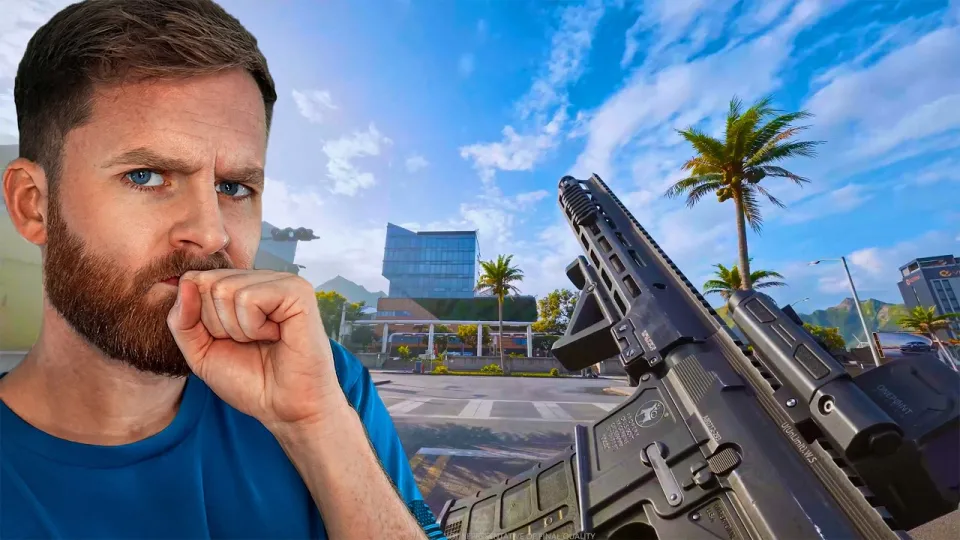
Warzone's biggest problem in 2026 is that it no longer has the free-to-play battle royale space to itself, and ECC: REDLINE from NetEase Games is the clearest example yet. The new free-to-play shooter borrows Warzone's loadout, ping and downed-state language almost wholesale, then bolts on hero abilities and movement pulled from other games. If you want the short answer: it is not a Warzone killer, but it is a credible Warzone alternative that puts real pressure on Call of Duty's annual model. You can see the full breakdown on IceManIsaac's channel, and merch supporting that coverage is available at the IceManIsaac shop.
What ECC: REDLINE actually is and why it gets called a Warzone clone
ECC: REDLINE is a free-to-play first-person battle royale built by NetEase Games, and the Warzone comparisons start before the first firefight. The interface reads like a translation of Call of Duty's: a downed icon that players recognize instantly, armor plates, a ping wheel, a loadout drop, and the same rhythm of drop, loot, rotate, fight. That is not an accident — the whole point of a competitor in this genre is to feel familiar enough that switching costs nothing.
The twist is where the inspiration stops. REDLINE is not a grounded military shooter. It is an arcade battle royale with hero characters, each carrying a signature ability, plus a traversal kit that goes well beyond sliding and parachutes. NetEase has shipped this kind of game before, and the studio clearly believes the Warzone formula plus hero skills is a stronger pitch than the formula alone.
The Blood Strike DNA behind the maps and heroes
ECC: REDLINE is best understood as a high-fidelity evolution of Blood Strike, NetEase's earlier mobile-and-PC shooter, rather than a from-scratch Warzone imitator. Players who spent time in Blood Strike have already mapped the overlaps: a battle royale map that looks like a remastered Shutter Island, a heal drone carried by a support-style character, and a sword dash with a bullet-reflect property that behaves one-to-one like an existing Blood Strike kit. One widely shared theory holds that some of this content was originally planned as a Blood Strike console and PC expansion before resurfacing under the REDLINE name.
That history matters for two reasons:
- The asset base is proven. These maps and abilities have been played and patched for years, so REDLINE launches with more iteration behind it than a typical debut battle royale.
- The visual jump is real. The same layouts that looked mobile-first in Blood Strike now read as a full current-gen presentation, which is exactly what makes the Warzone comparison land.
If you liked Blood Strike's map flow but wanted it at Warzone's production level, REDLINE is that trade. If you never played Blood Strike, the maps will simply feel like tight, fast, three-lane battle royale spaces with a lot of verticality.
Movement and abilities borrow from The Finals, not just Warzone
ECC: REDLINE's movement is where it stops being a Warzone clone and becomes its own thing, and the closest reference point is The Finals. The drop and flight systems echo Warzone's insertion and redeploy, but the dash, the sword deflect that turns bullets back on the shooter, and the exit-style disengage tools are straight out of Embark's arena shooter. Viewers who watch the gameplay side by side with The Finals consistently flag the same three moments: the reflect, the dash, and the way fights break contact.
The practical effect on gameplay is a much higher skill ceiling for evasion. In Warzone, escaping a losing fight means breaking line of sight and plating up. In REDLINE, it can mean deflecting a burst back at the attacker, dashing through a doorway, or exiting the engagement entirely with an ability. That raises the value of cooldown management and makes hero selection a real strategic decision rather than a cosmetic one.
The trade-off is legibility. A grounded military shooter tells you what killed you. An arcade shooter with deflects, dashes and drones asks you to learn a roster before fights feel fair, and that is the single biggest adjustment for a Warzone veteran.
What Warzone players will recognize immediately
The core loop of ECC: REDLINE is deliberately Warzone-shaped, and that is the strongest argument for trying it. The pieces that carry over include:
- Armor plating and a health economy that rewards resetting fights.
- A downed state with a revive timer, complete with an icon Warzone players will clock in half a second.
- A ping and communication system built for squad play.
- Loadout-style weapon access, so gunfights are decided by build and aim rather than scavenging luck.
- A drop-and-redeploy flow that keeps squads in the match.
Mouse aim is another recurring talking point. Players comparing footage frame by frame argue the raw mouse input looks cleaner than Call of Duty's, with less of the smoothing that has defined recent Warzone builds. That is a subjective read from gameplay footage, not a measured test, but it points at a real frustration: a large share of the Warzone audience wants input to feel direct again.
The pitch that Warzone cannot match: no yearly reset
The most persuasive thing about ECC: REDLINE is structural rather than mechanical — it does not reset. Call of Duty's battle royale has spent years tied to an annual premium release, which means new maps, new metas and, for many players, a new set of unlocks every twelve months. A persistent free-to-play client with continuous updates is a fundamentally different promise, and it is the reason so many lapsed Warzone players are paying attention.
That promise cuts both ways. A game with no annual reset depends entirely on a live-ops team that can keep content flowing for years, and NetEase's track record in Western markets is uneven. The upside is obvious: your progression, your unlocks and your map knowledge keep their value. The risk is equally obvious: a persistent game that stops getting meaningful updates becomes a stagnant one.
The open questions: SBMM, aim assist and ability clutter
The legitimate concerns around ECC: REDLINE are the same three that come up in every Warzone conversation, and none of them are settled. Skill-based matchmaking is the loudest: a large chunk of the Call of Duty audience wants looser lobbies and accepts weaker players in exchange for variety, and NetEase has not committed publicly to a model. Aim assist strength is the second, especially for controller players who want rotational assist dialed back rather than tuned up. The third is ability clutter — players who prefer grounded, military-style shooters want a mode with hero skills switched off entirely, and that request is common enough that it looks like an obvious playlist addition.
A fourth question is longevity. A free-to-play shooter with hero abilities and no annual reset needs a monetization model that funds years of content without splitting the player base. Cosmetic-only is the assumption; nothing has been confirmed at the scale REDLINE would need.
How to judge ECC: REDLINE for yourself
ECC: REDLINE is worth evaluating on three concrete criteria rather than on how closely it copies Warzone. First, check whether the movement and abilities feel readable after a few hours — if you cannot tell what killed you, the arcade layer is failing. Second, test the input: mouse feel and aim assist tuning will decide whether the gunplay holds up over hundreds of hours, not the first match. Third, watch the update cadence in the first few months, because a no-reset model lives or dies on live-ops.
For players who want a Warzone-style loop without the annual reset, REDLINE is the most direct option on the table. For players who want grounded military combat, it will feel like too much. Both reactions are reasonable, which is exactly why the comparison keeps getting made.
Useful links
- IceManIsaac merch and Academy store
- https://twitch.tv/IceManIsaac
- https://discord.gg/IceManIsaac
- https://twitter.com/IceManIsaac
- https://www.tiktok.com/@IceManIsaac
Bottom line
ECC: REDLINE does not beat Warzone at Warzone's own game — it beats it at the game Warzone stopped playing, which is a persistent, free-to-play battle royale that does not ask you to start over every year. NetEase's Blood Strike heritage gives it proven maps and abilities, The Finals-style movement gives it a higher skill ceiling, and the Warzone-shaped interface makes the switch nearly frictionless. The unresolved risks are matchmaking, aim assist and whether the live-ops can sustain a no-reset model. IceManIsaac's breakdown is the most efficient way to see the overlaps side by side, and if you want to back that coverage, the IceManIsaac shop is the place to do it.
Key takeaways
- ECC: REDLINE is a free-to-play NetEase battle royale that borrows heavily from Call of Duty Warzone's loadout, ping and downed-state systems.
- Its maps and hero abilities trace back to Blood Strike, including a reworked version of the Shutter Island layout that resembles Rebirth Island.
- Movement mixes Warzone-style drop and flight with The Finals-style dash, sword deflect and exit mechanics.
- No yearly reset is the core pitch: one persistent client instead of an annual Call of Duty cycle.
- The big open questions are skill-based matchmaking, aim assist strength and how grounded the hero abilities feel.
Questions & answers
Is ECC: REDLINE a Warzone clone?
It borrows Warzone's core language — armor plates, a downed state, pings, loadout access and a drop-and-redeploy flow — but it is not a straight copy. The maps and hero abilities come from NetEase's Blood Strike, and the dash, sword deflect and exit tools are closer to The Finals than to Call of Duty.
Will ECC: REDLINE have skill-based matchmaking and strong aim assist?
NetEase has not committed publicly to either model. The most common requests from Warzone veterans are looser matchmaking and dialed-back rotational aim assist for controller players, and both remain open questions that will shape how the game feels at launch.
Does ECC: REDLINE reset progression every year like Call of Duty?
The pitch is the opposite: one persistent free-to-play client with continuous updates instead of an annual reset tied to a premium release. That is its main structural advantage over Warzone, but it depends entirely on sustained live-ops support after launch.
Can I play ECC: REDLINE without hero abilities?
No grounded, ability-free mode has been confirmed. Players who prefer military-style shooters without dashes, deflects and heal drones have asked for a separate playlist, and it would be an obvious addition if the demand holds.
Source: Did They Just Release a BETTER Warzone? · Markdown version