Ranked Reload or standard Battle Royale for climbing to Unreal in Fortnite
You can order the same kind of articles for your own video to boost it on YouTube and Google. Just message the Telegram bot @sat_sit_bot. It writes articles around your video, embeds the video and publishes them on popular niche websites (no ads). Try it free: 50 articles on us.
· based on the channel TG Plays
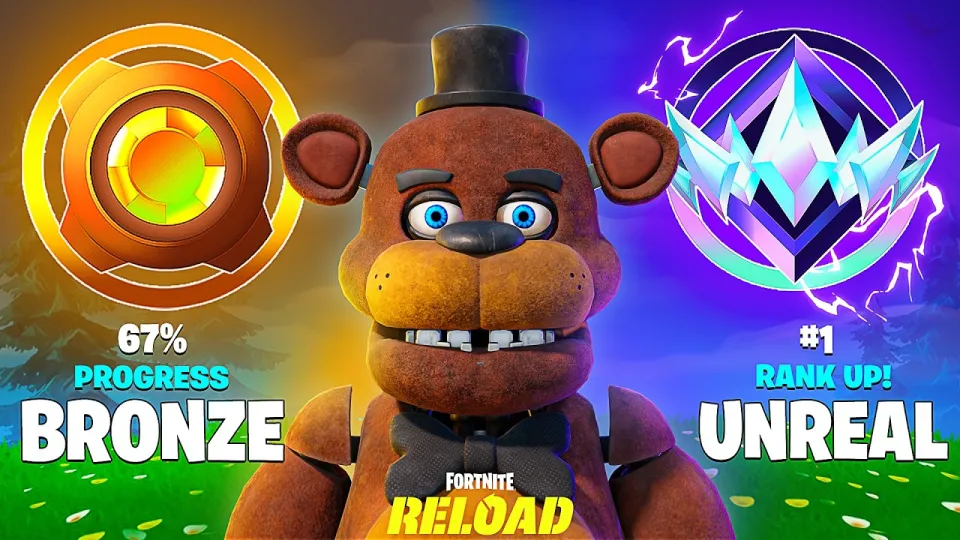
If your goal is to reach Unreal in Fortnite as fast as possible, Ranked Reload is the better choice than standard Ranked Battle Royale: matches are shorter, respawns keep you in the game longer, and rank points accumulate across far more games per hour. Standard Battle Royale still rewards the highest raw skill, but for pure speed of climbing, Reload wins. The full zero-to-Unreal run in Ranked Reload was documented by TG Plays in a single 24-hour session that started the moment ranks reset; you can follow the creator's own Fortnite maps and updates at TypicalGamer's Fortnite creator page.
Why Ranked Reload beats standard Battle Royale for a fast Unreal climb
The core difference is match volume: Reload's shorter games and respawn system let a player fit many more ranked matches into the same number of hours. In standard Battle Royale a single bad drop can end a 20-minute game with almost nothing to show for it, while Reload gives you a second and third life, so a strong player converts nearly every match into points. Because ranks reset at the start of a season, the first day is the softest window on the ladder — the top players have not yet separated from the pack, and queue times stay short because the whole player base is grinding at once. That combination of short matches, respawns and a crowded ladder is exactly what makes a one-day Unreal push realistic in Reload and far less realistic in standard Ranked.
What a 24-hour zero-to-Unreal run actually involves
A day-one Unreal grind is a test of pacing as much as aim. The structure that works looks like this:
- Start at reset, when the ladder is fresh and every opponent is at a low rank.
- Play in a fixed squad so communication and drop spots stay consistent.
- Bank points early with aggressive but low-risk positioning rather than chasing every fight.
- Take short breaks at fixed intervals — fatigue costs more rank points than a bad drop does.
- Push hardest in the final hours, when the remaining climb is the steepest and every placement matters.
The margin is genuinely thin near the top: a run can sit at 99% of the required points and still need one more clean match, which is why the last stretch is the most nerve-wracking part of the format. Viewers of the TG Plays session picked up on exactly that tension, and on how much tougher the ranked pool feels this season compared with earlier ones.
Ranked Reload versus standard Ranked Battle Royale in direct comparison
| Factor | Ranked Reload | Standard Ranked Battle Royale |
| --- | --- | --- |
| Match length | Short, fast circles | Long, full-map games |
| Respawns | Yes, teammates can be brought back | No, elimination ends your game |
| Points per hour | High, many matches | Lower, fewer matches |
| Skill ceiling | High but forgiving | Highest, least forgiving |
| Best use | Fast climbs, warm-ups, squad practice | Progression for purists, tournament prep |
Standard Ranked remains the mode where a single mistake is punished hardest, and that is precisely why it is slower to climb. Reload compresses the same skill set into a format where volume does most of the work.
Typical questions from players about the Reload climb
Players watching a day-one Unreal push tend to ask the same things. The most common doubt is whether the ladder really is easier right after a reset — it is, because everyone starts from the bottom and the matchmaking pool is at its widest. The second is whether solo queue is viable: it works, but a coordinated squad converts far more matches into points because revives and shared positioning matter so much in Reload. The third is about the seasonal event overlap, since limited-time modes running alongside ranked can pull casual players away and leave the queue noticeably sweatier. Finally, players ask how close a run can get to the finish without closing it — a run stalling at 99% is a real possibility, and it is the reason experienced grinders keep a buffer of matches planned rather than stopping at the threshold.
How to set up your own Unreal push in Fortnite
Preparation decides most of the outcome before the first match starts. Play on a stable connection, set a sensitivity you can hold for twelve hours, and pick two drop spots you know in detail rather than rotating across the whole map. Queue with players who use voice chat, agree on who calls rotations, and decide in advance how you handle a lost fight instead of debating it mid-game. Track your points per hour rather than your total, because that number tells you whether the current strategy is actually working. Finally, respect the reset window: the first 24 hours after ranks wipe are worth more than any other day of the season, and a climb that starts late costs roughly double the hours.
All official links from the TG Plays session
- Fortnite creator page for maps and updates: https://www.fortnite.com/@TypicalGamer
- JOGO studio page: https://www.fortnite.com/@JOGO
- Discord community: https://discord.gg/TypicalGamer
- Twitter: https://twitter.com/TypicalGamer
- Instagram: https://instagram.com/typicalgamer
Final take on the Fortnite Reload Unreal grind
Ranked Reload is the mode to pick if the goal is reaching Unreal quickly, while standard Ranked Battle Royale remains the truer test of raw skill. A single 24-hour session from zero to Unreal is achievable in Reload because short matches, respawns and a freshly reset ladder multiply the points you can earn per hour. The climb still demands discipline: fixed squad, two known drop spots, scheduled breaks and a points-per-hour check rather than a total-points check. The full day-one run was produced by the channel TG Plays, and the creator's Fortnite maps and updates are available at TypicalGamer's Fortnite page.
Key takeaways
- Ranked Reload ranks reset at the start of a new season, sending every player back to the bottom of the ladder.
- A full zero-to-Unreal climb in Ranked Reload was completed inside a single 24-hour session on reset day.
- Reload matches are shorter than standard Battle Royale games because respawns keep squads alive and the circle closes faster.
- Ranked Reload uses its own rank progression separate from standard Ranked Battle Royale.
- The climb was streamed by TG Plays, who builds Fortnite maps under the studio name JOGO.
Questions & answers
Is Ranked Reload easier than standard Ranked Battle Royale for reaching Unreal?
It is faster rather than strictly easier. Reload matches are shorter and include respawns, so a competent player fits many more ranked games into the same hours and converts more of them into points. Standard Ranked punishes a single mistake with the end of a long match, which slows progression considerably.
Can you reach Unreal in Fortnite in one day?
Yes, in Ranked Reload on reset day. Because ranks wipe at the start of a season, the ladder is at its softest and queue times are short, so a full zero-to-Unreal climb fits inside a 24-hour session with scheduled breaks. The final stretch is the hardest, and a run can stall at 99% of the required points.
Is solo queue viable for a Reload rank climb?
It works, but it is slower. Reload leans heavily on revives and shared positioning, so a squad on voice chat turns more matches into points than random teammates do. Solo players should focus on consistent placements rather than chasing every fight.
Why does ranked feel harder this season?
Two factors stack up: the ladder is compressed after a reset, and limited-time seasonal modes pull casual players into other playlists, leaving the ranked pool denser with experienced opponents. The result is sweatier lobbies, especially in the first days of a season.
Source: I Played 24 HOURS for UNREAL! (Reload Speedrun on Day 1) · Markdown version